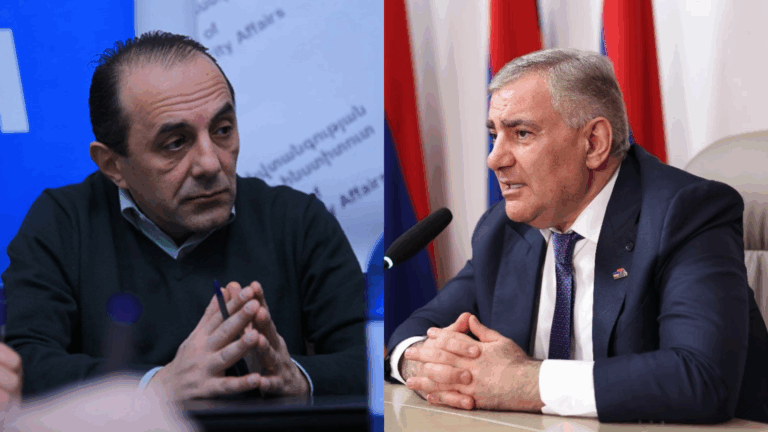

Losses for Armenia would outweigh potential gains: Yevgeny Belyakov
Yevgeny Belyakov, economics commentator at Komsomolskaya Pravda, shared with Alpha News his commentary on the economic costs Armenia would face should the country leave the Eurasian Economic Union and reorient toward the European Union.
“Armenia’s severing of ties with Russia would, of course, entail certain economic difficulties, because any small country is heavily dependent on its largest economic partners. Naturally, Russia remains one of the primary markets for Armenian goods and maintains close economic ties with the country. Armenia is a member of the Eurasian Economic Union, essentially the equivalent of the EU, where there are no borders or customs duties. Within such an economic space, doing business is considerably easier: goods and services move faster and at lower cost. Especially given that over the past few years Armenia has served as one of the main hubs through which parallel import flows passed. A large number of economic linkages were established, and a portion of the revenues remained inside Armenia thanks to its intermediary role between Russia, European countries, and other states seeking to circumvent sanctions. So severing these ties would, in the long run, not be a particularly favorable development for Armenian business,” the expert said.
According to the interviewee of Alpha News, Armenia faces a difficult process of breaking into the European Union market, where an already highly competitive environment has taken shape.
“As for whether the European Union will be able to replace Russia as an economic partner, that may happen eventually. However, given the historically established relationship between Russia and Armenia, the losses, in my view, will outweigh the potential gains. In the short term, Armenia could lose quite a lot. Some of those losses may later be offset through the development of relations with the EU, but that is far from a foregone conclusion. The European market is highly competitive, and gaining entry with your own products is extremely difficult. When it comes to large economic blocs such as the EU or the EAEU, it is typically the larger states with sizable domestic markets and strong economic players that benefit most from integration. It is precisely those countries that reap the main advantages of tariff-free access and the ability to move their goods freely into the markets of smaller states,” Belyakov concluded.
 Now live