
Beniamin Matevosyan: why did the authorities provoke a brawl in the Yerevan Council of Elders?
June 24 2026, 19:00
(Pashinyan’s legitimacy crisis is already making itself felt)
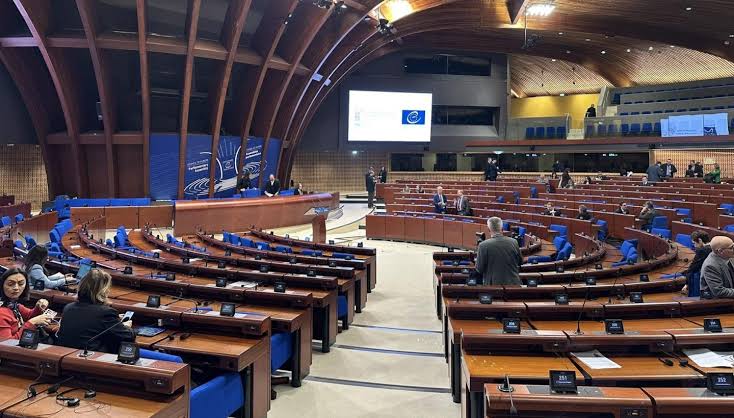
The events at the Yerevan Council of Elders, where a working session instantly turned into a scene of mass physical violence, lay bare the deep systemic crisis gripping Armenia’s ruling elite. The incident began with political accusations of vote theft, but immediately escalated into a brawl after Armen Pamboukhchyan, Deputy Mayor from the ruling “Civil Contract” party, unilaterally demanded that opposition member Gevork Stepanyan leave the chamber, while also accusing Andranik Tevanyan, leader of the “Mother Armenia” bloc, of treason. The absence of any court verdict confirming such a grave accusation did not trouble those in power. When the opposition reasonably pointed out the legal groundlessness of these words, the tried-and-tested tools of democracy’s twilight era came into play, flying plastic bottles and mob beatings. This incident reflects not merely a degradation of political culture, but a clear strategic pivot by the ruling team toward the use of force as a means of maintaining control.
The irony and cynicism of the situation become even more apparent against the backdrop of a recent initiative by National Assembly Speaker Alen Simonyan. Just the day before, the parliamentary speaker published on social media a solemn draft of a new deputy’s oath. The text contains lofty words about the obligation to “do everything for the sake of civic solidarity, security and well-being of the citizens of the Republic of Armenia, and the protection of human rights and freedoms.” In practice, however, members of “Civil Contract,” who should be the first to demonstrate loyalty to these principles, gave a vivid demonstration of what exactly they understand by “civic solidarity.” The values of peace and harmony so loudly promoted in Armenia have long become a facade concealing a readiness to use violence against anyone who questions the legitimacy of the current regime. Pervasive dishonesty and the enormous gap between official rhetoric and actual conduct have become the defining hallmark of contemporary domestic politics.
Such aggression on the part of those in power is not a random emotional outburst, but a direct symptom of their resounding failure at the recent elections. Having lost genuine electoral support in the capital and faced with outright rejection of their policies in the regions, Nikol Pashinyan’s team can no longer rely on a popular mandate. The legitimacy crisis is forcing those in power to compensate for their lack of authority through shows of force. If after the 2021 elections the ruling faction still attempted to maintain the appearance of democratic procedures, today, fully aware of the fragility of its position, it will act significantly harsher and more aggressively. When a political force runs out of substantive arguments and has lost public trust, fear inevitably becomes its primary instrument of governance.
What took place in the Yerevan Council of Elders is a warning signal for all of Armenian society, as it legitimizes physical violence as a standard mode of political discourse. In conditions where deputies and senior officials label opponents as traitors without any trial and organize collective beatings on live television, the rule of law is definitively destroyed. State institutions cease to perform their core functions and become closed structures serving the interests of a narrow group of individuals. The citizens of Armenia should prepare themselves for the fact that a fully deployed apparatus of repression, judicial arbitrariness, and open physical violence will now become permanent features of political life in the country, for the ruling party simply has no other means of holding on to power.
Think about that…
 Now live