
Armenia may face sharp deterioration in citizens’ wellbeing: Andrey Perla
August 19 2026, 20:00
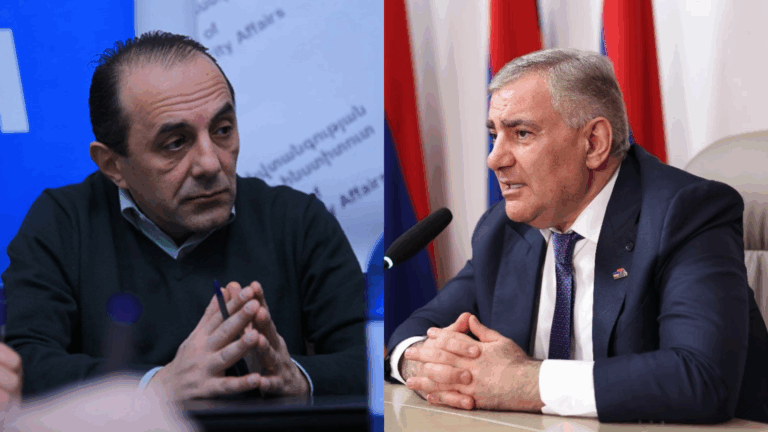
Andrey Perla, political scientist, commented to Alpha News on Armenia’s course under Nikol Pashinyan and the first international phone call by the new speaker of Armenia’s National Assembly with Ruslan Stefanchuk, chairman of Ukraine’s Verkhovna Rada.
According to the expert, Armenia under Pashinyan, especially over the past year, has been drifting fairly quickly from the status of Russia’s ally to that of an ally of EU countries.
“Armenia under Pashinyan, especially over the past year, as I understand it, this isn’t very strongly tied to the elections, is drifting fairly quickly from the status of Russia’s ally to that of an EU ally. And the EU countries, as we can see, have lately been concerned almost exclusively with confronting Russia, with the war against Russia that Europe is waging, since Pashinyan apparently doesn’t fully understand what he’s doing, and his colleagues in the Civil Contract party understand it even less. Armenia is very easily, effortlessly becoming one of the EU’s tools used to fight against Russia, in particular to demonstrate the ostensible support for Ukraine that the EU so badly needs today,” Perla noted.
The expert stressed that Yerevan’s actions are hard to interpret as anything other than unfriendly gestures toward Moscow, warning of the possible consequences of such a policy.
“Of course, it’s hard to interpret this as anything other than, to put it politely, unfriendly gestures from Armenia toward Russia, and of course these unfriendly gestures won’t go unnoticed. Russia has already effectively invited Armenia to choose between two chairs, between the EAEU and the EU. Russia has already reduced trade turnover with Armenia as much as possible under the current regime. According to the latest data, the reduction in trade turnover will reach less than 3 billion US dollars already this year. For Armenia, that’s a catastrophe.”
In the political scientist’s view, the economic consequences of worsening relations with Russia could prove far more severe for Armenia than any possible gains from closer ties with the EU.
“Even by conservative estimates, Armenia is losing 20% of its GDP, which can’t be offset by any friendship with the EU, let alone with Ukraine. But the people who control Mr. Pashinyan, and Mr. Rubinyan, who now heads Armenia’s parliament, couldn’t care less. They don’t need Armenians to be wealthy or prosperous. They need Armenians to demonstrate the notorious support for Ukraine. So that’s what they’re doing.”
Perla also predicted a decline in living standards for Armenia’s population, an intensification of emigration, and a possible shift in the country’s foreign policy course over the longer term.
“I think that already this year, and even more so next year, this will result in a very sharp deterioration in the wellbeing of ordinary Armenian citizens living in the country itself. This will drive an increase in emigration from Armenia to Russia, and specifically the emigration of the most educated, economically active, and even the wealthiest Armenians. And in the longer term, the consequence of this could be a reversal of Armenian policy back toward Russia, but of course that won’t happen anytime soon, unfortunately,” Perla concluded.
 Now live