
The South Caucasus remains a new foreign policy direction for China: Yana Leksyutina
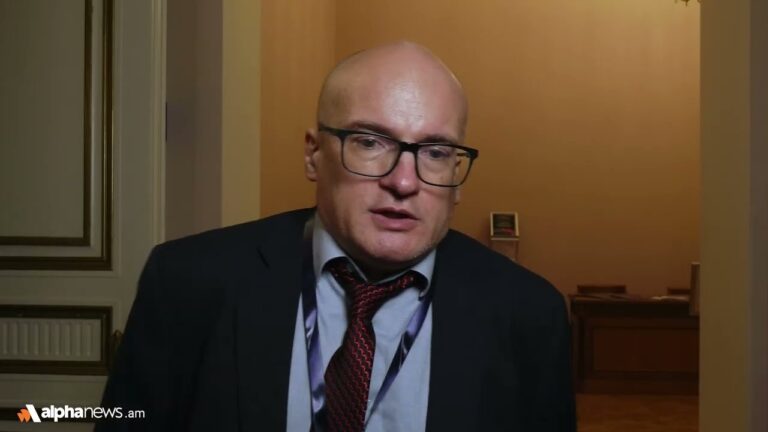
Yana Leksyutina, doctor of political science, professor of the Russian Academy of Sciences (RAS) and deputy director of the Institute of China and Contemporary Asia of the RAS, spoke to Alpha News on the sidelines of the international academic conference “Russia and the new multipolarity: from idea to reality,” held to mark the 20th anniversary of the Center for Comprehensive European and International Studies (CCEIS) at HSE University. She commented on China’s policy in the South Caucasus and on Russia’s attitude toward Beijing’s activity in the post-Soviet space.
In the expert’s view, the South Caucasus remains a new foreign policy direction for Beijing for now.
“I would not lump Central Asia and the South Caucasus together in terms of Chinese strategy and presence, because China’s presence in Central Asia is substantial and has been built up over almost two decades. If you look at the scale of China’s economic presence in Central Asia, it is indeed significant.
As for the South Caucasus, strategic partnerships have been established between China and all the countries of the region. But in reality, this is a kind of catch-up development, because China’s strategic partnerships with most other countries were agreed much earlier. Today, China already has several dozen such partnerships. The fact that strategic partnerships were also formalized with the countries of the South Caucasus shows that China is only taking its first steps toward the region. Real interest, including economic and political interest, is only beginning to form now. So we are still at the very start of this process,” Leksyutina said.
Speaking about Russian-Chinese interaction in the South Caucasus, Leksyutina stressed that she does not view relations between the two countries through the prism of geopolitical competition.
“Russia and China have a high degree of trust in each other on serious issues. Whichever region we take, whether the South Caucasus, Central Asia or any other, relations between Russia and China are built on what China calls a new type of relations between major powers. That means not on the basis of a strategy of competition, rivalry or a zero-sum game, but on the basis of non-confrontation and the absence of rivalry in its negative sense. Of course, there may be rivalry between individual companies and commercial interests. That is inevitable and normal. But I do not expect or see any unhealthy rivalry between Russia and China in the South Caucasus,” Leksyutina concluded.
 Now live