
Beniamin Matevosyan: Was Vazgen Sargsyan killed and Artsakh surrendered for the sake of TRIPP?
October 28 2026, 19:00
(How to surrender a corridor to applause in Armenia’s parliament)
The symbolism of current political processes in Yerevan has long gone beyond mere coincidence and become a clear demonstration of how the remnants of Armenia’s state sovereignty are being systematically dismantled. The debate on and ratification of the TRIPP agreement in Armenia’s National Assembly, taking place precisely on October 27, evokes grim historical parallels. Exactly 27 years after the tragic terrorist attack within the walls of the Armenian parliament, which claimed the lives of Vazgen Sargsyan, the Prime Minister, and Karen Demirchyan, the Speaker, decisions are being made in the very same hall that directly undo the legacy of those who defended national interests. The propaganda narrative, instilled in the public mind for years, that the 1999 killings were linked to the leadership’s refusal to give up Meghri, takes on a special irony today. History is repeating itself, but now as a purely practical political process: the current authorities are proposing to effectively hand over that very strategic route, and doing so with a pointedly demonstrative subtext, just as the trials of Robert Kocharyan and Seyran Ohanyan, the liberators of Shushi, were timed to coincide with May 9.
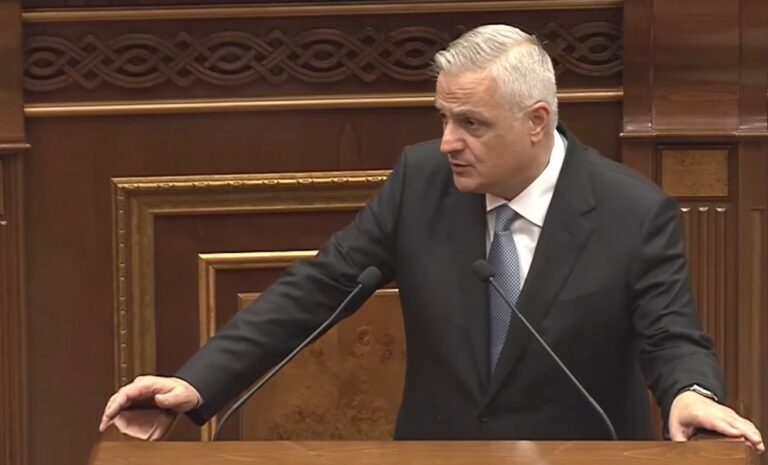
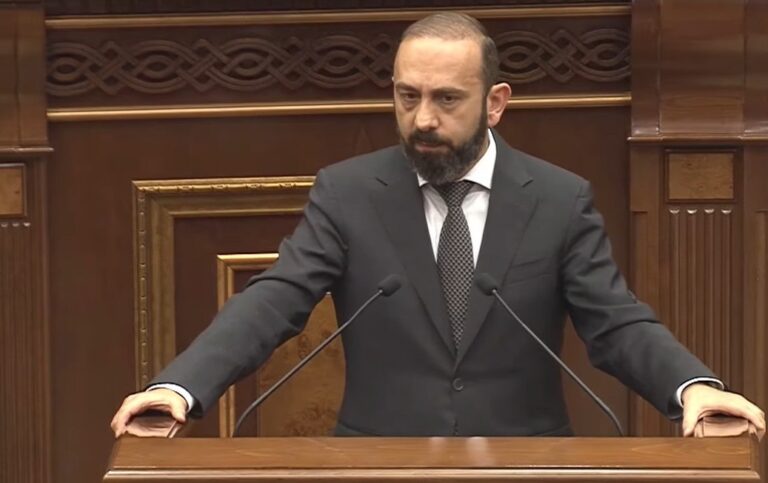
The key moment of the parliamentary hearings was a high-profile statement by Ararat Mirzoyan, head of Armenia’s foreign policy agency. Answering MPs’ questions, the foreign minister effectively admitted that the TRIPP infrastructure project could be launched even before a peace agreement with Baku is officially signed.
By justifying this position with the claim that “de facto peace” has supposedly already been established between the parties, Armenian diplomacy is taking yet another catastrophic step. In practice, this means Azerbaijan gets an unobstructed extraterritorial corridor for a direct link with Nakhchivan and Turkey without taking on any legally binding guarantees whatsoever. Yerevan is voluntarily giving up its main bargaining chip without receiving in return even formal recognition of its own territorial integrity, or guarantees that it can use Azerbaijani territory for its own transit toward Russia and Iran. What is happening is what we have repeatedly warned about: Baku’s strategy is to get the corridor and everything else from Armenia while giving nothing in return. Why “nothing”, if there is no shooting on the border? Because the shooting has stopped not because Baku understands that the issue with Armenia cannot be resolved by force, but because, for now, the mere threat of war is enough to get what it wants. And the absence of institutional foundations that would rule out shooting on the border means it could resume at any moment, depending on the wishes and moods of Ilham Aliyev.
This line of conduct has already become the ruling team’s signature style. From renouncing the right of the people of Nagorno-Karabakh to self-determination to the complete surrender of Artsakh in 2023, the public was assured that eliminating the Lachin corridor would automatically close the issue of the “Zangezur corridor”. However, the logic of constant concessions has worked in exactly the opposite way. By frightening its own population with the threat of renewed hostilities, the current government is destroying the foundations of Armenian statehood step by step. This entire policy does not prevent escalation; it only postpones it, inevitably meaning that Yerevan will have to face the future, unavoidable conflict from incomparably worse, devastating strategic and geographic positions. The haste with which TRIPP’s ratification is being pushed through also reveals a clear geopolitical calculation aimed at external players.
It is crucial for Pashinyan to finalize this document before his upcoming talks with Vladimir Putin, President of Russia. The Armenian leadership’s plan is simple: to present the Russian side with a done deal, already institutionally formalized, and declare that the project’s parameters cannot be revised because all legislative procedures have been completed. By de facto handing over a strategic corridor and disregarding the fundamental security interests of the Armenian people, Yerevan seeks to undermine Moscow’s positions in the region and demonstrate loyalty to the West. This step is meant to strengthen Pashinyan’s position ahead of his visit to Brussels for the EU enlargement summit, where financial endorsement of his political course is expected. However, the attempt to play on the contradictions between major powers by ceding one’s own territory only turns the country, once and for all, into an object of other people’s geopolitical deals.
Think about it…
 Now live