
Beniamin Matevosyan: Pashinyan needs a political field without Kocharyan, Karapetyan and Tsarukyan
October 27 2026, 19:00
(Local elections in Armenia will not change Putin’s demands)
The results of the local government elections in Armenia have given Nikol Pashinyan, Prime Minister of Armenia, a convenient pretext for yet another round of political manipulation. Having won an overwhelming majority of votes in most communities, where in some places the Civil Contract party ran with no real competitors at all, the head of government claimed to feel uncomfortable with results of 80–90%, hinting that such figures evoke dangerous associations with authoritarianism. With this in mind, he set the goal of creating a new “state-oriented, intellectual and honest opposition.”
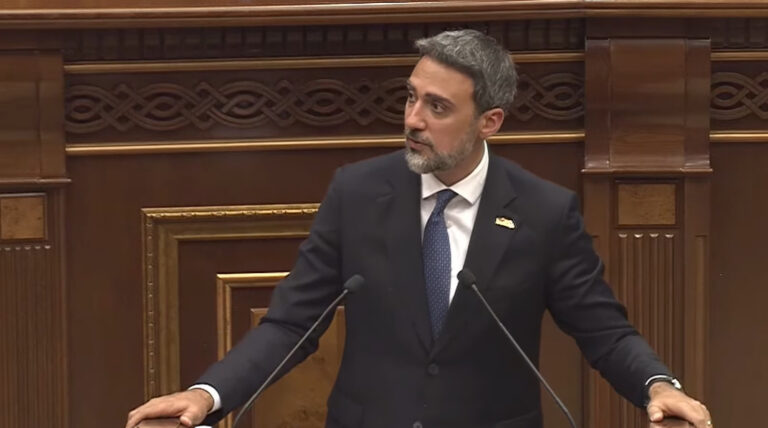
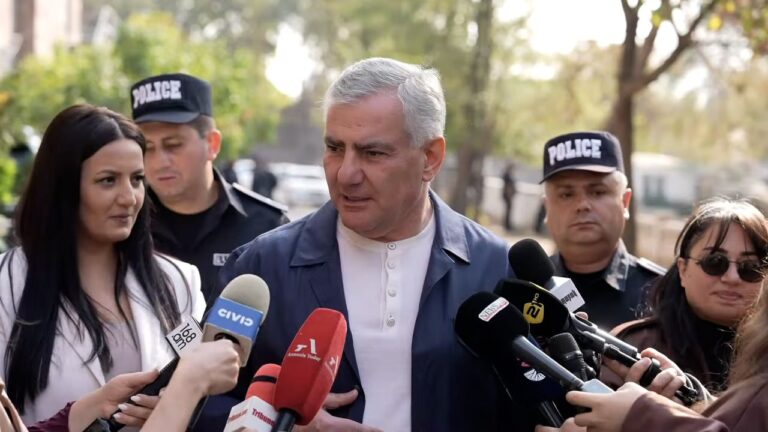
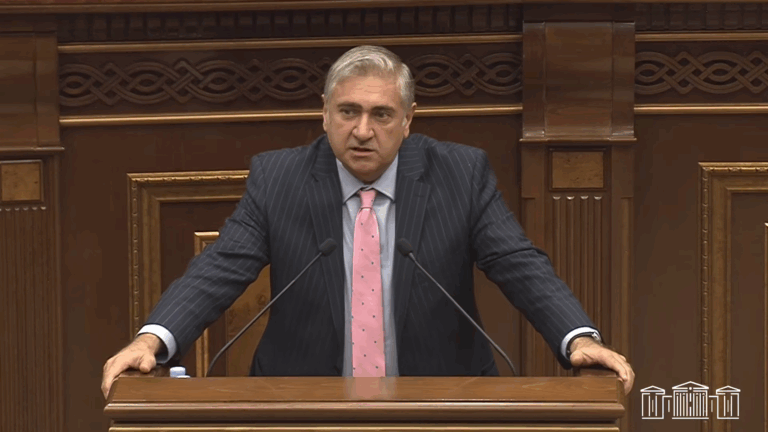
However, behind this rhetoric lies not concern for the quality of political debate, but sheer manipulation and an attempt to clear the political field once and for all. The ideas voiced by the Prime Minister reveal his desire to lock in a situation in which major, well-resourced opposition players are completely squeezed out of the country’s political life. The ruling party’s high results are not due to a surge of public affection for the current government, but to the fact that the key opposition forces, namely Robert Kocharyan’s Armenia bloc, Samvel Karapetyan’s Strong Armenia party and Gagik Tsarukyan’s Prosperous Armenia, simply did not take part in these municipal elections.
The absence of the leading opposition structures at the local level created a vacuum that allowed the ruling party to dominate with virtually no resistance. Having seen how advantageous and comfortable it is to compete in a cleared arena without figures of the stature of Kocharyan, Karapetyan and Tsarukyan, Pashinyan seeks to extend this model to the national level. The signal sent by his video address is crystal clear: pressure on the real opposition power centers from the administrative and law enforcement apparatus will only increase in the near future.
At the same time, the elections highlighted the crisis of the so-called “opposition.” Tiny parties, the former authorities who brought Pashinyan into the Prime Minister’s office, and new political projects demonstrated de facto complete incompetence, proving unable to rally even a few thousand votes around themselves. Acting as extras, they merely provided the illusion of an alternative, creating the appearance of a multiparty system where there was no real competition.
Moreover, Pashinyan’s key calculation that convincing municipal election figures will strengthen his position in foreign policy appears to be mistaken. The results of the local elections in no way change the alignment of forces or the balance in negotiations with key foreign partners, above all Moscow. Vladimir Putin, President of Russia, will not view the head of the Armenian government as a more legitimate or self-confident leader on the basis of domestic regional tallies.
Furthermore, the Kremlin has no intention of abandoning its basic demands on Yerevan, the main one being a clear definition of the country’s foreign policy course and a referendum on the choice between the EAEU and the EU. It is this referendum and the geopolitical processes accompanying it that will shape the state’s short- and medium-term prospects. Pashinyan’s attempts to construct a domestic landscape convenient for himself, without his key opponents, will not overshadow the fundamental foreign policy challenges facing Armenia.
Think about it…
 Now live