
Beniamin Matevosyan: Robert Kocharyan’s main mistake after October 27
August 28 2026, 12:30
(What failed in 1999 succeeded in 2018)
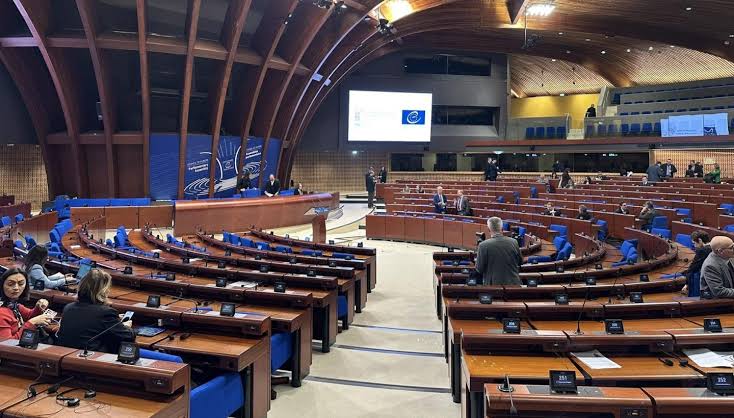
The statements being made today in the National Assembly of Armenia clearly demonstrate how, after decades, Nikol Pashinyan and his political team are rewriting history. Sasun Mikaelyan, a deputy from the ruling faction, reflecting on the tragedy of October 27, 1999, emotionally describes the details of the execution of the country’s leadership, Vazgen Sargsyan, Karen Demirchyan and their associates. In his interpretation, the death of the key leaders of the parliament and the government left only one “king and god” in the country — Robert Kocharyan. According to Sasun, Robert Kocharyan was the main beneficiary of the terrorist attack. But where is the truth, and what was Robert Kocharyan’s main mistake?
On October 27, 1999, not just a terrorist act occurred (we will have time to discuss the foreign policy “beneficiaries” of which), but an attempted upheaval. While the country was in shock over what had happened, and the entire burden of responsibility for governing the state and preventing a civil war fell on President Kocharyan’s shoulders, a de facto attempted coup d’état was carried out in the country.
On October 27, 1999, while Vazgen Sargsyan’s body was still warm, a group of military men and politicians led by Vahan Shirkhanyan “proposed a deal” to Robert Kocharyan: Shirkhanyan, Andranik Kocharyan, Vagharshak Harutyunyan, and others suggested that President Kocharyan appoint them to key positions in the country, and in return they would refrain from making public accusations about his involvement in organizing the terrorist attack. Kocharyan categorically rejected this ultimatum, viewing it as a sordid attempt to seize power. This is where Kocharyan’s mistake lies, it was necessary to classify the actions of this group as an attempt to overthrow the constitutional order and to punish all those named in the list with long‑term imprisonment.
The figure of Andranik Kocharyan deserves special attention in this context. As opposition political analysts and experts have repeatedly noted, Anush Harutyunyan, an employee of the public relations department and a close associate of Andranik Kocharyan, arranged for Nairi Hunanyan’s group to be given access to the National Assembly building.
A deeper analysis shows that the shooting of the parliament was not an isolated action carried out by a single group. The perpetrators acted as tools of an external moderator whose goal was to decapitate Armenia, provoke a civil war, and plunge the country into chaos. The social disillusionment of the 1990s, born out of the highly complex privatization process, created the ground on which the slogans against “robbers and bloodsuckers” found a receptive audience. It was with these populist theses that Nairi Hunanyan entered the session hall of the Armenian parliament.
Behind all this, a specific external factor can be traced, the Turkish factor. It is noteworthy that before the terrorist attack, Nairi Hunanyan visited Turkey, where he was received at a high political level, which is absolutely impossible for an ordinary Armenian figure in the absence of diplomatic relations. The potential scenario in Ankara was simple: to repeat the situation of 1993–1994, when the Armenian side took advantage of the internal chaos in Azerbaijan and defeated the enemy on the battlefields of the First Karabakh War. In 1999, Turkey was counting on anarchy in Yerevan so that Azerbaijan could take revenge, if not on the battlefield, then at least at the negotiating table.
When this plan failed due to the restraint of the second president, the same populist slogans and methods were used on March 1, 2008, and then in the spring of 2018. To destroy Armenian statehood, it was not a Turkish agent who was needed, but a local pseudo‑fanatic capable of winning the trust of the disillusioned masses.
What external forces failed to achieve through the terrorist attack on October 27, 1999, and the attempt to seize power on March 1, 2008, was consistently carried through in 2018. The lack of a strict legal assessment of the 1999 coup attempt and the failure to form a forward‑thinking national elite led to the systematic dismantling of all state institutions, from the parliament and the courts to the army and trust in Armenian‑Russian relations.
Think about it…
 Now live