
Moscow saw the EU summit in Yerevan as a signal against Russia: Igor Semenovsky
May 09 2026, 16:45
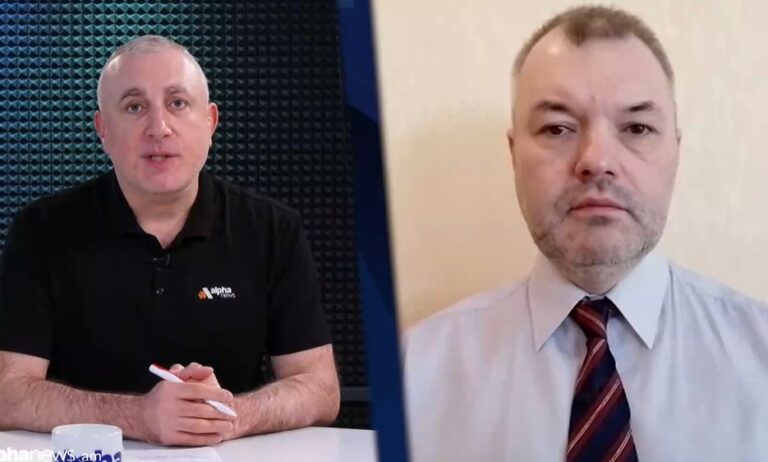
Igor Semenovsky, a political scientist and associate professor at the Financial University under the Government of the Russian Federation, commented in an interview with Alpha News on the European Political Community summit in Yerevan and on Armenian-Russian relations.
“In Moscow, this could only be perceived negatively. The content of the statements made left no room for any other reading, they were received unfavorably. These words were spoken on the soil of a friendly, allied state, yet the impression created was that, under the guise of diversification, one specific side was being chosen, one that is hostile to the Russian Federation in the most direct sense. How else can Russia react when a friend suddenly turns out to be a friend of your enemy? The question then arises: does he remain your friend, or does he become an enemy? In this regard, there is certainly no optimism, only skepticism,” the political scientist said.
According to the expert, Armenia’s main export goods may soon face additional inspections, and shipments could be suspended.
“Unfortunately, as a Russian political scientist, I can see that Russia’s Foreign Ministry only made its position clear in the last month and a half to two months. The current Armenian leadership’s trajectory is clearly not moving toward cooperation with Russia, not even toward engagement with the EU, but effectively away from Russia. Under these circumstances, one could say that reacting is already too late, given how far the relationship has deteriorated. Nevertheless, the traditional instrument of response is trade and economic policy. On one hand, there is the EAEU framework; on the other, there are phytosanitary, technical, and customs regulations. As a result, Armenia’s main export goods, mineral water, wine and spirits, fruits, vegetables, flowers, and much more, will almost certainly face additional inspections and could be suspended. A separate question is whether the Russian side should have acted sooner, even in its dealings with the current Armenian leadership,” the expert emphasized.
The political scientist noted that the European Political Community summit in Yerevan served a single purpose, to shore up the incumbent leadership.
“From a geopolitical standpoint, it would be naive to think that Armenia will change course following democratic elections, given the full weight of EU influence, political technology, coercive tools, organizational, informational, and other instruments that have been deployed over the past year. It is clear that summits and events of this kind are held for one purpose only: to support the incumbent leadership and then, through organizational means, make up any shortfall in votes by whatever means necessary. Moscow, it seems to me, is operating under certain illusions that these elections will be free, transparent, and in line with OSCE standards,” the political scientist said.
 Now live