
A person devoid of inner peace cannot speak calmly: Hieromonk Ruben Zargaryan
May 19 2026, 21:50
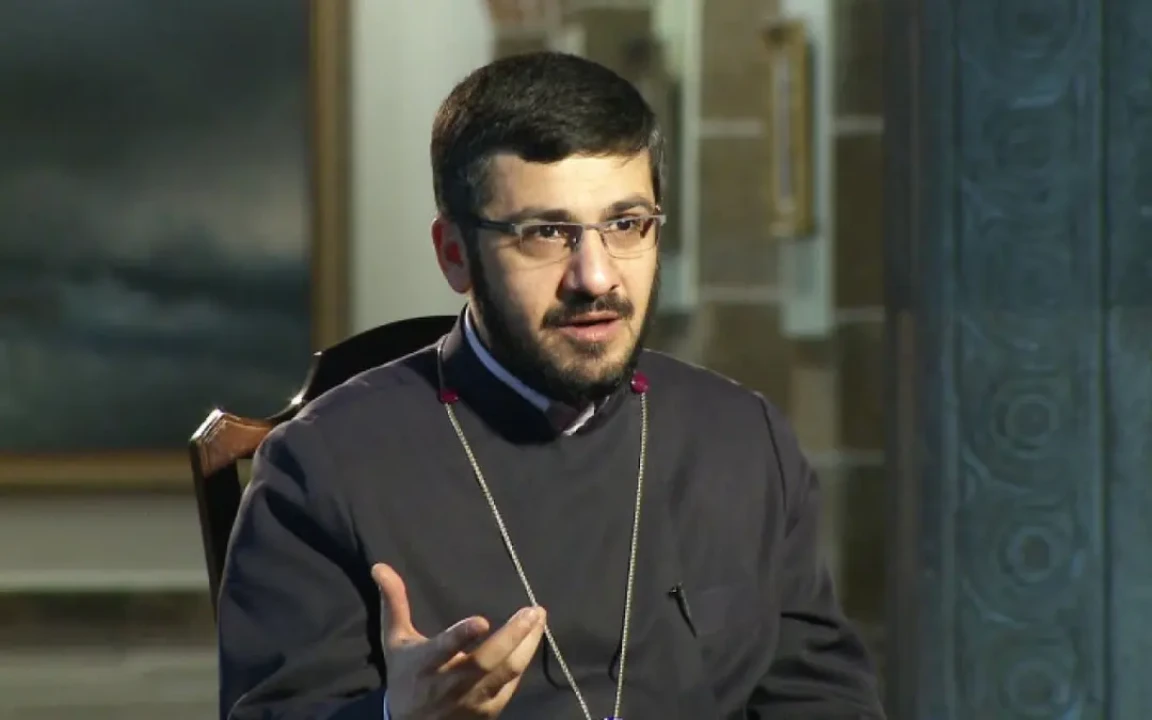
Ruben Zargaryan, hieromonk and locum tenens of the Masiatsotn Diocese of the Armenian Apostolic Church, published a post titled “A tongue without control is the unbridled drum of the soul.”
According to the clergyman, in the spiritual tradition, the condition of a foul-mouthed, profane, and internally unbalanced person is not considered merely a problem of language or behavior. It is regarded as an expression of estrangement from God, inner rebellion, misanthropy, and spiritual darkness.
“In the Gospel, our Lord Jesus says: ‘Out of the abundance of the heart the mouth speaks’ (Matthew 12:34). That is, the tongue reflects a person’s inner world. When the heart is filled with hatred, anger, resentment, pride, or inner chaos, this finds expression in speech.
In Armenian church thought, the causes of such a condition may include: loss of the sense of God’s presence, unhealed inner pain, pride and self-love, persistent anger, spiritual emptiness, a habit of guilt, an unbridled tongue, a harmful environment, and the absence of a prayer life.
St. John Chrysostom taught that the tongue is a mirror of the heart: if the source is not pure, the water will not be pure either. A person who does not possess inner peace cannot speak calmly; a sinful tongue is a sign of the heart’s spiritual sickness. A person who has lost inner peace fills themselves, inside and out, with foul noise.
In the spiritual tradition, the word is not merely a sound. Speech possesses a creative power. God created the world through the Word, and man, as the image of God, can likewise bless or curse, heal or harm, give life or kill spiritually through his word. This is why the Epistle of James says: ‘A tiny spark can set a great forest on fire. And the tongue is a flame of fire. It is a whole world of wickedness, corrupting your entire body. It can set your whole life on fire, for it is set on fire by hell itself.’ (James 3:6).
Among the spiritual remedies are silence and control of the tongue. The Church Fathers often advised speaking less, not speaking in anger, first praying inwardly and then speaking. There is a magnificent psalm in which we ask God: ‘Set a guard over my mouth, Lord; keep watch over the door of my lips.’ (Psalm 141:3),” Father Ruben emphasized.
 Now live