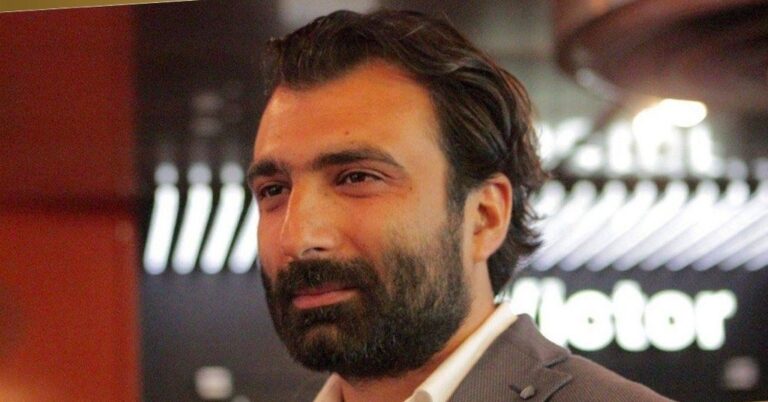

The Armenian establishment wants to turn Armenian society toward the EU, which is extremely difficult: Vladimir Krotkov
Vladimir Krotkov, a political scientist and professor of political science at the State Academic University for the Humanities, commented to Alpha News on Armenia’s authorities’ drive for EU membership.
“If we look at today’s relations between Russia and Armenia, they are largely shaped by the pre-election situation in Armenia. It is very tense, as the parliamentary elections are of great importance: the government is formed following them, that is, the executive branch, which essentially determines the country’s political course. I believe that the current tensions in the relationship are largely driven by the policies of Pashinyan and his administration. However, after the elections, whatever coalition and political forces come to power, including the Civil Contract party, relations will be adjusted regardless. The pre-election period always pushes the situation to the limit, especially under current circumstances. Going forward, I think the parties will seek more pragmatic engagement, though Armenia’s foreign policy vector will also significantly influence Russian-Armenian relations,” the expert said.
According to Krotkov, there are fundamental structural differences between the EU and the EAEU that make simultaneous participation in both integration projects difficult for any country.
“The Armenian establishment plans to carry out a reorientation of Armenian society toward the EU. In theory this is possible, but in practice it is extremely difficult. At the very least, it is a very long-term project. Its implementation requires a serious political carte blanche not four years of any given government’s mandate, but considerably longer periods. One need only look at Turkey, which has been moving in this direction for decades and still has not become an EU member. The core contradiction, therefore, lies precisely in the combination of EAEU membership and an orientation toward the European Union. These are different political and economic spaces with different standards, rules, players, and institutions. As a rule, countries within the EU’s orbit participate only to a limited degree in other integration economic projects, and vice versa. That, in my view, is where the main tension lies, and the source of the problems we are discussing today,” the expert concluded.
 Now live