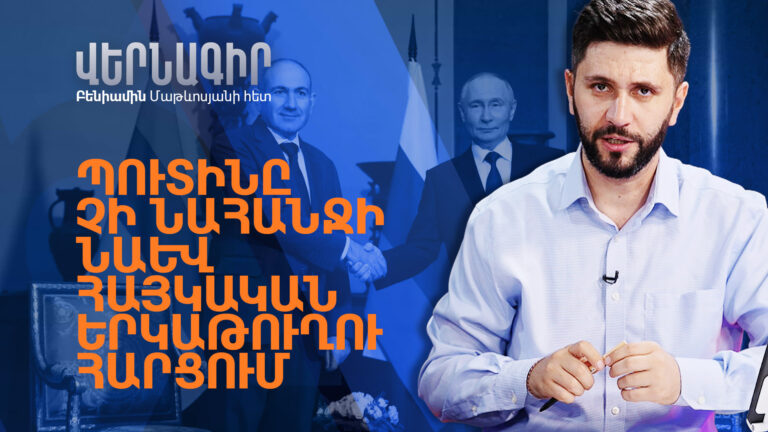

Beniamin Matevosyan: Putin will not take a step back on the Armenian railway either
October 14 2026, 19:00
(Moscow’s demands are a package deal)
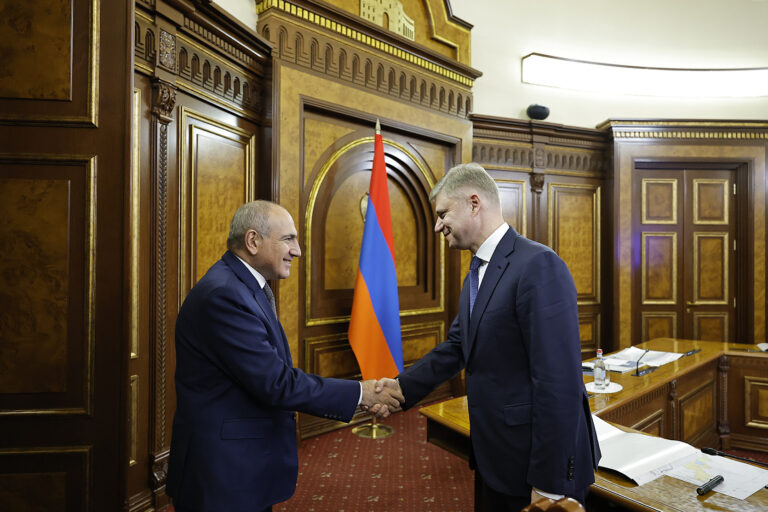
Tomorrow’s trip to Armenia by Oleg Belozerov, head of Russian Railways, comes against the backdrop of harsh statements from Yerevan about possibly stripping the South Caucasus Railway of its concession, and of growing understanding in Moscow of Nikol Pashinyan’s anti-Russian course.
The visit of Oleg Belozerov, head of Russian Railways, to Yerevan promises to be one of the most tense and important episodes in the current relations between the two states. The trip comes amid loud statements by the Armenian prime minister that the government has the tools, as well as the legal and political grounds, to terminate the concession agreement with the South Caucasus Railway. In Yerevan, there is open talk of handing management of this key transport artery to a third party, with Kazakhstan, the UAE or Qatar named as potential candidates. In Moscow, such initiatives are seen as far more than a commercial redistribution of property or a change of operator; they are viewed as yet another calculated step in a deliberate anti-Russian policy of squeezing Russia out of strategically important regional infrastructure projects.
The situation is aggravated by the fact that, on the eve of the visit, leading Russian sources (for example, analysis published by RIA Novosti) carried clear assessments of what is happening, directly noting an attempt to artificially isolate Russia from the most important transport corridor running through Armenia. “Work on creating points of tension right next to Russia, as well as attempts to isolate our country, does not stop for a minute. The prime minister of the Republic of Armenia has stated that his cabinet has the tools to forcibly annul the agreement with Russia on concession management of the Armenian railways,” the analysis in the Russian state media outlet says.
Against this troubling backdrop, Aleksey Overchuk, Deputy Prime Minister of the Russian Federation, recently recalled the constructive initiatives supported by President Vladimir Putin back in January of this year. These involve a large-scale, mutually beneficial restoration of railway sections firmly linking Armenia with Azerbaijan and Turkey, including the strategic routes from Yeraskh to Nakhichevan and from Gyumri to the Turkish border. However, instead of practical dialogue on implementing these vital plans, Yerevan prefers to play the political card, citing complaints about the appearance of the rolling stock and insisting on handing the concession to favored players.
For his part, Vladimir Putin has already given an extremely principled and clear assessment of how the Armenian railway operates, stressing that investment depends directly on actual cargo volumes. The head of the Russian state noted that without a full unblocking of regional communications, the opening of borders and a real settlement of the consequences of the conflict, any large-scale injection of funds is economically unviable. “As for the railway, we are leasing it, roughly speaking. Investment in such infrastructure depends on transport volumes. If there are no transport volumes, there will be no investment and no development. If only the state of martial law linked to the conflict had ended, perhaps everything would have turned out differently. If the border with Turkey opens, other routes will develop too, which may lead to growth in cargo shipments. If that happens, everyone will be able to make these investments, Russia included,” Putin said after his meeting with Pashinyan in Bishkek.
Nevertheless, the current actions of the Armenian leadership clearly demonstrate the problem’s final shift from a purely economic plane to one of hard political confrontation. In Russian government and expert circles, a firm belief is growing stronger that Yerevan has deliberately taken a course of systemic confrontation and is pursuing an openly unfriendly strategy toward Moscow.
Such a shortsighted approach by a very narrow political circle in Yerevan, obsessed with the idea of squeezing Russia out of the region by any means, may prove very costly for Armenia itself. Moscow shows unwavering firmness and does not intend to back down in defending its interests in the Armenian direction, which the high-ranking guest is set to discuss in substance during the talks.
If Armenia is definitively and officially given the status of an unfriendly state, this will inevitably and painfully hit all key aspects of everyday life for ordinary citizens of the Republic of Armenia, including the economy, energy, trade and social stability. Games with key infrastructure for the sake of momentary opportunistic ambitions will not bring prosperity.
Think about it…
 Now live