
Beniamin Matevosyan: What could Pashinyan have asked Mishustin for?
July 07 2026, 19:00
(Moscow cannot ignore Pashinyan’s illegitimacy)
Nikol Pashinyan’s visit to Yekaterinburg for a meeting with Mikhail Mishustin, Chairman of the Government of the Russian Federation, is an obvious attempt by Yerevan to urgently resolve the problems that have arisen in the Armenian economy. The main and, perhaps only, real goal of the Armenian prime minister was to secure Moscow’s agreement to the return of national capital to the Russian market and to restore full-fledged trade. Such haste is easily explained by the complete failure of the Western vector of expectations for support of the Armenian economy. Ursula von der Leyen, President of the European Commission, on whom Pashinyan had placed enormous hopes, effectively left Armenia empty-handed. Instead of real multi-billion-dollar financial assistance, Brussels limited itself to promises of customs benefits and the redistribution of old grants (18 million euros out of the 50 million promised before the elections).
European promises are incapable of solving any of the structural problems of the Armenian economy, which is critically dependent on the EAEU and Russian energy resources. Understanding the full catastrophic nature of the situation, Pashinyan tried to use the Innoprom exhibition platform to “synchronize watches” and resolve accumulated problems behind closed doors. However, his negotiating positions looked extremely weak from the outset, if not worthless. Yerevan’s desire to sit on two chairs while simultaneously flirting with the EU led to a harsh reaction from Moscow. As early as April 1, Vladimir Putin, President of the Russian Federation, clearly stated Russia’s position, declaring that EAEU membership is absolutely incompatible with integration into the European Union. The Kremlin’s basic formula remains unchanged: Russia will not sponsor or subsidize Armenia’s accession to an openly hostile Western bloc that is waging hybrid war against Moscow. Hoping for a revision of this approach by Russia is the height of political naivety.
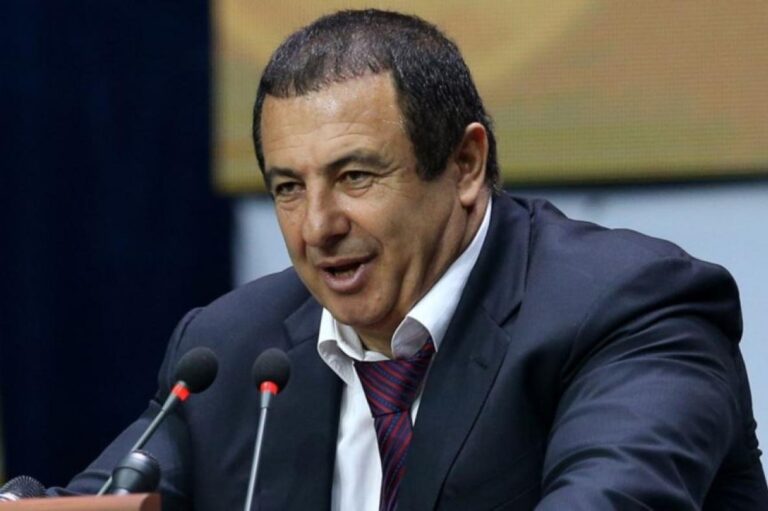
Another demonstration of the primitiveness of Armenian diplomacy came in the form of internal repressions launched right on the morning before the Yekaterinburg visit. On Pashinyan’s orders, harsh pressure and arrests were sanctioned against supporters of opposition leader Gagik Tsarukyan, whom Armenian authorities traditionally associate with Moscow. It is likely that the authors of this dubious strategy hoped to strengthen their negotiating positions ahead of the meeting with Mishustin.
But hostage-taking logic does not work in serious geopolitics. Moscow understands perfectly well that even if Pashinyan imprisons Tsarukyan and the entire Armenian opposition, Russia’s economic reality and strategic interests will not change as a result, and the closed doors of the Russian market will not open. Moreover, Vladimir Putin did not even receive the Armenian prime minister, which became a key diplomatic marker of these days.
The factor of Pashinyan’s own legitimacy, or rather, its complete absence, takes on particular significance in the current reality. The recent elections in Armenia did not bring the sitting prime minister real popular support. He does not hold a constitutional majority in the National Assembly, and his current hold on power rests solely on a Constitutional Court ruling and administrative manipulation of mandates.
Pashinyan has lost the trust of the majority of the republic’s citizens, and this internal crisis has not gone unnoticed in Russia. It is notable that Mikhail Mishustin, in his opening remarks, touched on the topic of the Armenian elections, yet pointedly did not congratulate Pashinyan on his victory. Moscow is making clear that it sees the Armenian leader’s illegitimacy and will take this factor into account in building any further contacts.
The Russian side behaved pragmatically in the talks. Mishustin reminded that Russia remains Armenia’s largest investor and partner, with Russian companies controlling key sectors, from energy to transport. But this status also imposes strict obligations. Instead of political concessions, Moscow, de facto, demanded that Yerevan ensure a comfortable regime for Russian investors and strict observance of their rights. Pashinyan’s statements that Armenia is constructively minded and wants to see the systematic functioning of EAEU mechanisms look like an attempt to put a brave face on a losing hand. Armenia’s leadership will have to choose between real economic survival in union with Russia and ephemeral European promises, for which Yerevan will have to pay with its own statehood.
Think about it…
 Now live