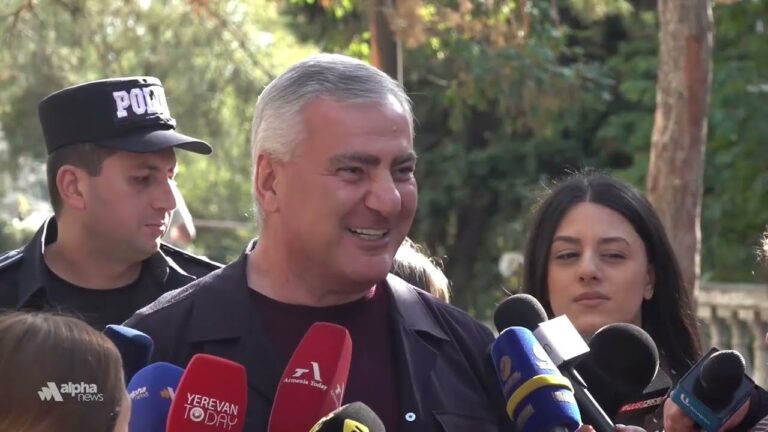

Beniamin Matevosyan: will the border with Turkey not open until 2030?
June 25 2026, 12:00
(Armenian citizens have been deceived once again)
The bold declarations of Armenia’s current authorities about the dawning “era of peace” and the imminent unblocking of regional communications have once again collided with a harsh reality that officials are now forced to acknowledge publicly. Speaking in Brussels at the launch of a new European Union initiative, Vahan Kostanyan, Armenia’s Deputy Foreign Minister, announced a timeline that fundamentally contradicts the ruling team’s pre-election slogans. According to him, official Yerevan is counting on the opening of borders and the establishment of transport links with Turkey and Azerbaijan by 2030. This statement effectively acknowledges that no real breakthrough in unblocking communications or opening borders is expected in the foreseeable future, and that Armenian citizens have once again fallen victim to political manipulation. Turkey and Azerbaijan have no intention of easing the sanctions they apply against Armenia, and closed borders are sanctions in their purest form.
If during election campaigns society was fed the message that long-awaited peace and good-neighbourliness had already arrived and citizens simply needed to “stand up for it by voting for the Civil Contract,” today’s diplomatic rhetoric pushes that threshold back by at least four more years. It is clear that behind the attractive phrase “vision for 2030” lies a whole package of stringent preconditions from Ankara and Baku, the fulfilment of which will stretch on for years. Thus, instead of the rapid economic takeoff and unblocking that were proclaimed from podiums, the country is left with an indefinite wait tied to geopolitical concessions.
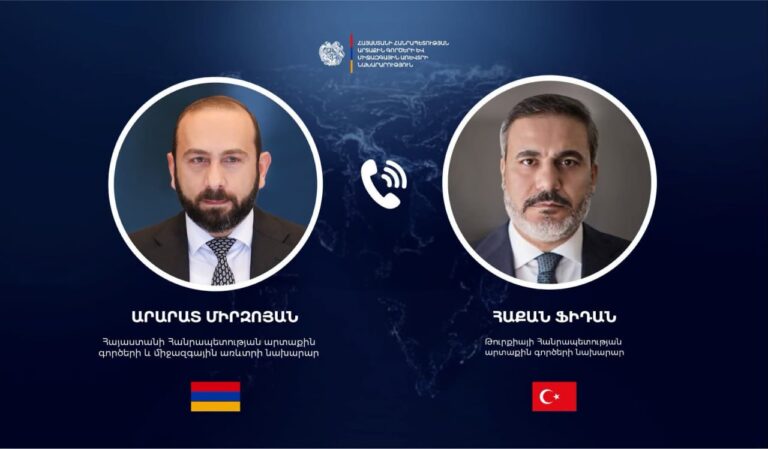
Particular attention is drawn to the narratives Armenian diplomats are using to justify these shifted timelines. Speaking on a European platform, Kostanyan repeated the Turkish foreign policy agenda almost word for word. In discussing the instability of traditional routes, disruptions in global logistics, and the growing role of the Middle Corridor, which is meant to connect Europe and Central Asia via the South Caucasus, Armenia’s Deputy Foreign Minister effectively quoted official statements by the Turkish leadership. Turkish Foreign Minister Hakan Fidan, for instance, had previously used virtually identical language to describe the Middle Corridor as the most reliable and strategically important trade route between Asia and Europe in the context of the global crisis. The fact that an Armenian official so precisely mirrors another country’s terminology and concepts points to Yerevan’s deep subordination in shaping the regional agenda.
In an attempt to put a brave face on a bad situation, the Foreign Ministry representative mentioned the TRIPP project in southern Armenia, being implemented jointly with the United States, and expressed hope for European assistance in infrastructure modernisation. Yet all these appeals to Western partners look like an attempt to mask a direct dependence on the goodwill of neighbours. Kostanyan hastened to add that communications could open sooner if Baku and Ankara show willingness, mentioning their signals regarding transit. The paradox, however, is that in this configuration Armenia merely adjusts to others’ economic, political, cultural, religious, military, demographic, and geopolitical interests, hoping to become part of someone else’s transit project, while its own state guarantees of security and stability remain deeply in question.
Think about that…
 Now live