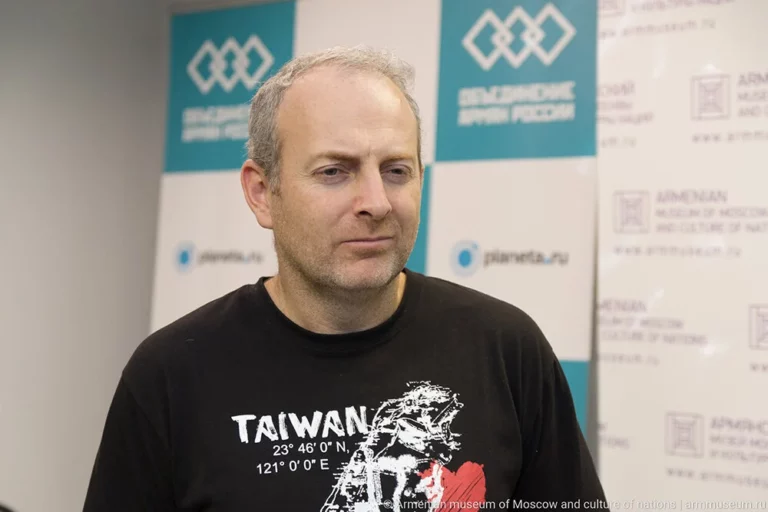

Beniamin Matevosyan: Putin will continue imposing sanctions because of Pashinyan
August 04 2026, 19:00
(The National Assembly elections have only deepened the crisis)
The events in Prague in 2022, when Nikol Pashinyan’s personal decision effectively handed Artsakh over to Azerbaijan, clearly demonstrate that a single person’s choice can fundamentally shape large-scale historical and geopolitical processes. Today, when some analysts try to justify the actions of Armenia’s leadership and claim that Pashinyan cannot change the current course of events even if he sincerely wanted to, the Prague precedent shows exactly the opposite. The current prime minister is deliberately seeking to damage relations with Russia, purposefully steering the country toward direct confrontation with Moscow.
The latest confirmation of this hard line came with an another restriction from Russian regulators. Roszdravnadzor, in an informational letter dated July 31, No. 01I-886/26 (01И-886/26 rus.), introduced a temporary ban on the civilian circulation of the popular product “Water for Injections,” produced by the Yerevan Chemical-Pharmaceutical Firm OJSC. Despite its outwardly symbolic and technical nature, this decision clearly shows that as long as the current trajectory of Armenia’s authorities doesn’t change, sanctions won’t be lifted, they will keep being ramped up. Given that Pashinyan has no intention of changing course while he remains the country’s formal leader, Russian restrictions will continue. The recent National Assembly elections have only deepened the crisis, confirming that Moscow’s sanctions were never tied to the electoral process to begin with.
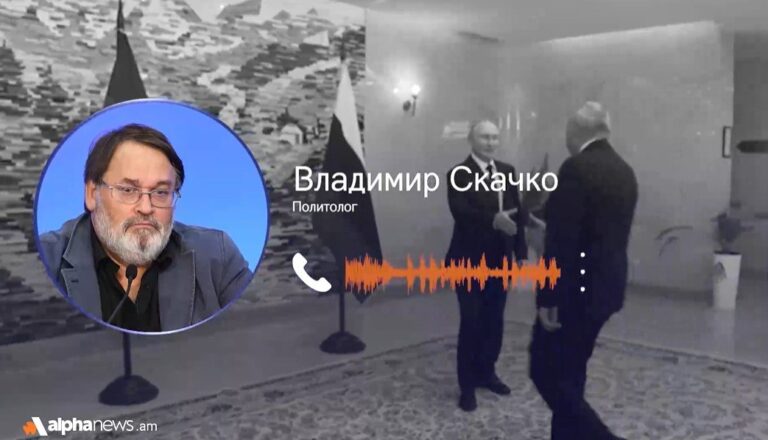
The recent phone call between Pashinyan and Putin, initiated by the Armenian side, ultimately exposed the depth of their disagreements. Moscow sees no problem for itself in the current state of relations and is prepared to let existing trends continue. Pashinyan, meanwhile, critically needs access to the Russian market; it’s vital for him to prevent a ban on money transfers, rising gas and gasoline prices, and restrictions on the export of essential goods. Yet these attempts at dialogue have gone nowhere. Notably, the official Armenian readout made no mention of congratulations, indicating that Vladimir Putin still has not congratulated Pashinyan on his election victory, which took place nearly two months ago.
The two sides also remain on opposite shores on the question of Armenia’s membership in the EAEU. Moscow insists on a referendum, while Pashinyan is stalling for time, wanting to leave the issue “for better times” so he can keep financing Armenia’s pivot to the West using resources from the Eurasian market. This tactic is inexorably leading toward Armenia’s EAEU membership being frozen as early as December.
Moscow’s insistence on a referendum stems from the logic of global confrontation. Russia is preparing for war with the EU, and the Kremlin needs to clearly understand which camp Armenia will end up in, among its allies, or among those who will be storming Russian territory. That is precisely why what’s needed isn’t an electoral farce whose results are being passed off as approval of Pashinyan’s course, but a separate referendum.
If the choice ends up favoring the authorities’ current course, Moscow will fully absolve itself of responsibility for Armenia’s future fate. At the same time, Turkey is already restoring the railway section to Gyumri to speed up military logistics, pointing to real threats in the region slipping out of Russia’s control. In April, Pashinyan justified the surrender of Artsakh by claiming that Russia was supposedly the first to recognize it as part of Azerbaijan, yet he has not responded to Moscow’s repeated demands for a referendum. This once again proves that his past statements were merely a justification for surrendering territory, with nothing to do with his real motives.
Think about that…
 Now live