
Armenian authorities are to blame for problems in Armenian-Russian relations: Konstantin Zatulin
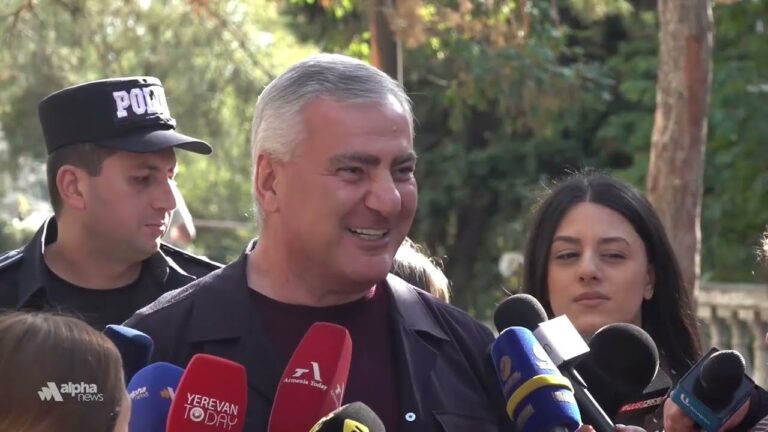
Konstantin Zatulin, First Deputy Chairman of the State Duma Committee on CIS Affairs, Eurasian Integration and Relations with Compatriots, commented to Alpha News on the current state of Armenian-Russian relations, the policy of the Armenian authorities, and the prospects for further engagement between Moscow and Yerevan, on the sidelines of the XII International Academic and Expert Forum “Primakov Readings.”
According to the deputy, Yerevan’s hopes of maintaining its former relations with Moscow while continuing its current policies are empty hopes.
“What surprises me are the so-called hopes of the Armenian authorities that, despite everything they are doing and plan to do, we should not respond or react in any way. I think these are empty hopes. And the full author of today’s problems in Russian-Armenian relations is, of course, the Armenian authorities, who are openly intending to fraternize with our geopolitical adversaries, who have declared the strategic defeat of Russia as their goal. At the same time, to pacify their own population, they spin fables claiming that Russia shouldn’t even be concerned about this. That it is being betrayed, that it is essentially being abandoned, this should not bother it. I would like to see any other country, including Armenia, that would react to such a challenge in this way,” Zatulin said.
Commenting on the parliamentary elections that took place in Armenia, the deputy said that there were grounds to consider the elections illegitimate even before election day.
“As for the current situation in Armenia, it was predetermined by what was essentially the usurpation of the elections during the vote on June 7. And ahead of that, we repeatedly stated that there were grounds to consider these elections illegitimate even before election day. Repressions have been unleashed, they are continuing and intensifying. Threats, bans, and arrests of opposition figures are multiplying. There is pressure on the Armenian Church, interference by secular authorities in Church affairs, that is, a violation of principles considered universally accepted in the civilized world.
All of this characterizes the policies of the incumbent prime minister today. Of course, these are Armenia’s internal affairs. But these internal affairs of Armenia can be commented on from the outside as well, as the European Union and the United States do, and as we do too. And I want to note that ties between Russia and Armenia will continue to develop, especially with those people who seek this. But this does not mean at all that we should acknowledge the recent elections as having been genuine elections. There is a difference between de jure and de facto. And I think Mr. Pashinyan understands this well. And, trying to downplay the significance of this fact, he pretends not to care,” Zatulin concluded.
 Now live