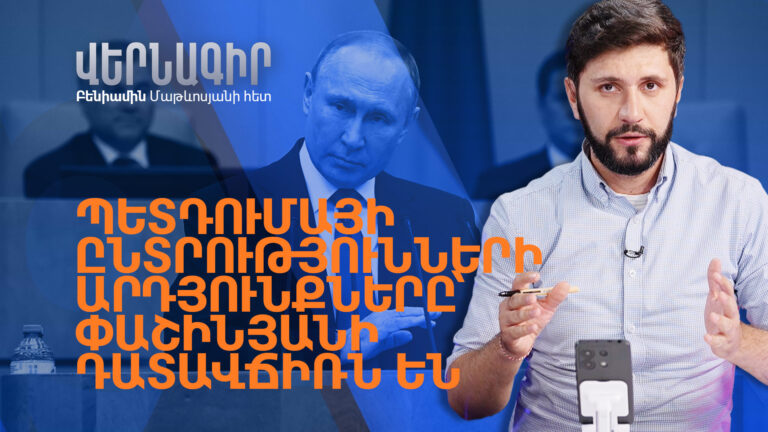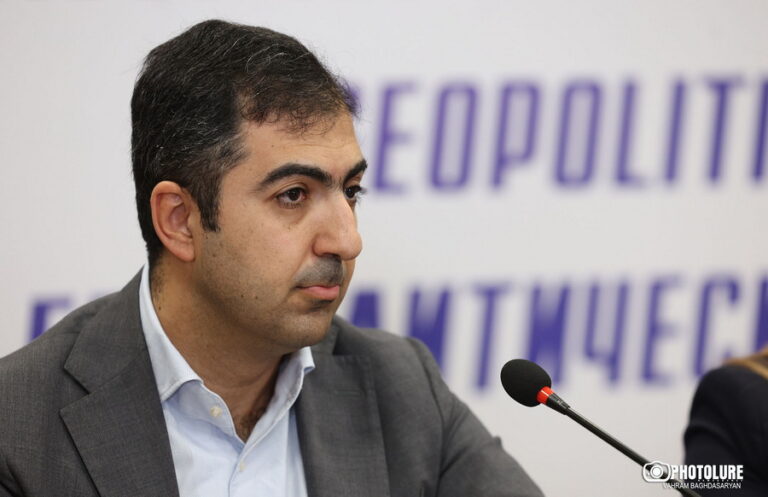

Beniamin Matevosyan: State Duma election results are a verdict on Pashinyan
September 23 2026, 19:00
(Armenia and Russia will continue drifting apart)
The results of the State Duma elections held from September 18 to 20, in which the “United Russia” party confidently retained its constitutional majority, sent a clear signal to the entire post-Soviet space and, above all, to Yerevan. According to the Central Election Commission, after processing the vast majority of ballots, the ruling party not only leads with over 57% of the vote on party lists, but also demonstrates absolute dominance in single-mandate districts, winning 208 out of 225. Taking into account the redistribution of seats from parties that failed to enter parliament, “Yedinaya Rossiya” (United Russia) is guaranteed to surpass the 301-seat threshold required for a constitutional majority. The parliamentary lineup is rounded out by the Communist Party (KPRF), the Liberal Democratic Party (LDPR), “Noviye Lyudi” (New People) and “Spravedlivaya Rossiya” (A Just Russia), while the current balance of power completely rules out any possibility of unexpected political maneuvering within Russia’s legislative branch.
The main takeaway from this outcome is the unconditional preservation and strengthening of the key vectors of foreign and domestic policy pursued under the leadership of Vladimir Putin. For Russia’s external partners and neighbors, this means the full continuity and firmness of its previous course. The elections also clearly demonstrated the high effectiveness of the mechanism for co-opting new elites. The systemic integration of participants in the special military operation into government bodies, from municipal legislative assemblies and regional parliaments to the State Duma, is shaping a new patriotic consensus. The arrival within the system of people who have gone through real trials and proven their loyalty to Russia’s state interests firmly cements Moscow’s uncompromising strategic line.
For the government of Nikol Pashinyan, this election outcome in Russia amounts to a genuine political collapse. Judging by the “Ukrainization” of Armenia’s pro-government media, Yerevan may have hoped, right up until the end, for a fragmentation of Russia’s political monolith or a shift in the priorities of Russian foreign policy under external and internal pressure. However, the preservation of “United Russia’s” constitutional majority and the influx of special military operation veterans into government mean that the Armenian leadership’s hopes for a “softening” of Moscow’s position are entirely unfounded. All of Russia’s previously stated demands and principles toward Armenia remain in force and will continue to be consistently upheld.
Above all, this concerns Moscow’s fundamental insistence that Armenia hold a full-fledged referendum on the country’s continued membership in the Eurasian Economic Union (EAEU). Even before the elections, Moscow made it clear that attempts at geopolitical drift toward the EU and NATO while retaining all the economic preferences of EAEU membership are no longer possible.
Furthermore, the continuation of the current course by the Russian authorities means that the economic and trade restrictions imposed on Armenian business and exports not only remain in force, but could also be expanded if Yerevan’s rhetoric continues to be perceived in the Kremlin as unfriendly. From statements by Russian officials, it was clear that Moscow no longer intends to make allowances for “allied status,” which has been de facto devalued by the actions of Pashinyan’s team. With Russian authorities demonstrating absolute unity and continuity, any attempts by the Armenian leadership to use EAEU economic preferences to finance a shift in Armenia’s foreign policy vector (the phrase most often repeated by Russian officials) will only further deepen the crisis in bilateral relations. The recent elections have definitively confirmed that the trend of Armenia and Russia drifting apart is becoming a long-term and inevitable reality. The old model of relations has run its course, and a new one has yet to be built.
Think about it…
 Now live