
Beniamin Matevosyan: Erdogan’s ambulance for Pashinyan
June 04 2026, 13:20
(It’s hard to state more openly that Armenia is heading into the Turkic world)
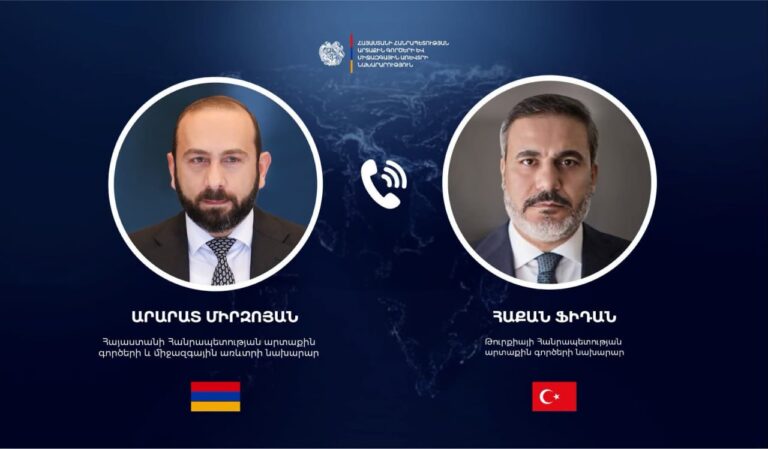
The latest diplomatic and economic signals coming through the Yerevan–Ankara channel point to unmistakable shifts in Armenia’s foreign policy that go far beyond simple “diversification.” Nikol Pashinyan’s phone call with Recep Tayyip Erdogan, the pointedly warm exchange of congratulations, and the recent visit of Armenian businesspeople to Kars are not merely a search for new partners, they are the emergency assistance that the Turkish leader is extending to the Armenian prime minister at a critical moment.
Today’s Yerevan is effectively trying to convince its own society that the loss of the Russian market and ties within the EAEU framework will not prove fatal, since an alternative has appeared on the horizon in the form of the Turkish and Azerbaijani directions. This is the creation of an illusion of control over a situation in which the Turkic world is meant to take the place of the familiar northern integration structures.
The most telling indicator of this process was the business meeting in Kars. Notably, the representatives who traveled to Turkey were precisely those who had encountered problems exporting to Russia: producers of fruit, flowers, and other agricultural goods. Yet here lies a fundamental contradiction. Turkey is itself a formidable exporter in the agro-industrial sector, and Armenian products are unlikely to find an open niche in that market. The real purpose of these contacts is not equal partnership but the gradual absorption of the Armenian economy. In effect, instead of the “path to Europe” promised by the authorities, Armenian business is being led by the shortest route to Kars, turning Armenia into an economic appendage of the Turkish-Azerbaijani tandem.
Particular attention should be paid to who is truly the architect of Armenia’s “departure” from Russia. Contrary to popular belief, the chief beneficiaries and moderators of this process are not Brussels or Washington but Baku and Ankara. The meetings of Shahin Mustafayev, Azerbaijan’s deputy prime minister, with Armenian representatives, and the intensification of contacts with Turkish business, demonstrate that Armenia is being drawn out of the Eurasian space and directly into the Turkic one. Pashinyan is betting on replacing the Russian vector with the Turkish one, believing this will bring stability. But the price of such “stability” differs fundamentally from previous commitments. Moscow never put forward demands touching on the deep foundations of national identity in exchange for economic access, whereas for Ankara and Baku economics is merely a tool for achieving political ends.
Supporters of the current course may argue that this amounts to nothing more than swapping one dependency for another, but that is a dangerous misconception. Unlike any other alliance, integration into the Turkic world will, for Armenia, be accompanied by harsh ultimatum-style demands: from radical changes to the Constitution and the abandonment of national symbols to the mass resettlement of Azerbaijanis on the republic’s territory under the guise of “return.” Economic cooperation with Turkey will serve as nothing more than a cover for ethno-demographic and military-political changes that would call into question the very existence of a sovereign Armenia.
What is today presented as “the first step in diversification” looks in reality like preparation for a national catastrophe of unprecedented scale. The attempt to fit Armenia into the security and economic architecture built by Erdogan and Aliyev ignores both the historical context and the real geopolitical ambitions of its neighbors. The consequences of this geopolitical pivot could prove so profound and irreversible as to surpass even the most tragic pages of early twentieth-century history. Pashinyan is accepting “a helping hand” from those whose strategic goals have historically precluded the existence of a strong and independent Armenia turning the country into an object of someone else’s geopolitical game, in which its interests will be sacrificed for the sake of forging a unified Turkic space.
Think about that…
 Now live