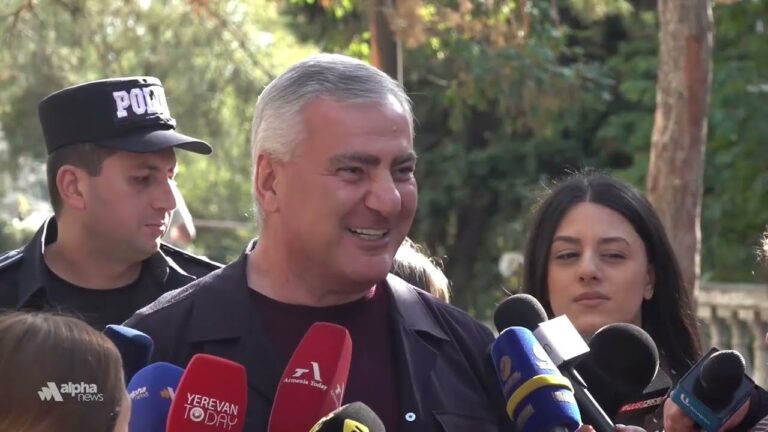

Beniamin Matevosyan: Lavrov and Shoigu have zeroed out Pashinyan’s government program
September 18 2026, 12:00
(The moment of truth is approaching)
The latest statements by senior Russian officials have marked a fundamentally new and far tougher stage in relations between Moscow and Yerevan. The remarks by Sergey Lavrov, Russia’s Foreign Minister, at the International Youth Festival in Yekaterinburg, together with the harsh assessment given by Sergey Shoigu, Secretary of the Security Council, have effectively drawn a firm line under the previous model of economic and political cooperation. The old model of Armenian-Russian relations has died, and a new one has yet to take shape. In essence, these synchronized signals from Moscow have completely zeroed out the five-year program for 2026–2031 recently adopted by the parliamentary majority of the Civil Contract party, formally the new Armenian government’s program. The program’s core targets, an ambitious average annual GDP growth rate of 6%, the creation of 125,000 new jobs, a doubling of exports, and a steady reduction in poverty, have been left without their main foundation: preferential access to the resources and market of the Eurasian Economic Union, and preferential access to Russian resources and its market.
The statement by Sergey Lavrov that Russia has no intention of artificially restricting Yerevan’s right to choose its partners, but also has no intention of financing Armenia’s European integration through EAEU benefits and preferences, strikes at the most vulnerable point of the Armenian economic model. Armenia’s authorities, having proclaimed a course toward diversifying foreign policy ties and adopting European standards, have at the same time counted on retaining all the benefits of participation in Eurasian integration structures. However, Moscow has once again made it clear that these two vectors can no longer be combined. The upcoming bilateral meeting between Vladimir Putin and Pashinyan, at which a direct conversation about Yerevan’s aspirations toward the EU is planned, will become a moment of truth. Logic also suggests that this meeting could take place before the next session of the Supreme Eurasian Economic Council, scheduled for December 2026 in St. Petersburg. That session would merely make public the outcome of the Moscow talks between Putin and Pashinyan.
The Russian side is, in effect, insisting on the need for a direct expression of the Armenian people’s will, a referendum on the choice between the EU and the EAEU. A refusal to take such a step, or an attempt to continue the tactic of sitting on two chairs, which is exactly how Russia views Yerevan’s current foreign policy strategy, will lead to the inevitable dismantling of preferential trade terms, a scenario that even the Governor of Armenia’s Central Bank has previously described as carrying catastrophic, near-apocalyptic economic consequences.
“First, this could have a primary effect, meaning an increase in the overall level of inflation. And a secondary effect, since the price of gas could also be factored into the cost of other goods, products and so on, and naturally this could also carry a certain type-B risk tied to a downturn in our economy.
That’s the scenario we had in mind, but from our point of view this is a type-X scenario, implying something more apocalyptic, to which our response would need to be much stronger, unnatural,” said the Central Bank Governor, responding to a question about whether the Central Bank was considering the possibility of a gas price increase.
What lends the current moment particular sharpness and unease is that Lavrov’s economic warning was immediately followed by a harsh continuation on the military-political and property front. The statement by Shoigu about what amounts to a raider seizure by Armenian authorities of Russian enterprises and sectors into which Moscow has invested billions over the years pushes the conflict to an entirely different level. Yerevan’s claims regarding the management of Armenian railways and its attempts to push out Russian business under
the pretext of integration into international transport networks have been called outright absurd and unfriendly in Moscow. When diplomatic language about incompatible regulatory standards gives way to accusations of expropriation and raiding, it means that the zone of potential crisis is expanding far beyond trade and customs duties.
Under these circumstances, the development targets announced by Pashinyan’s team look detached from reality. Maintaining 6% economic growth and doubling exports is impossible without duty-free access to the EAEU market, cheap energy resources, and the stable operation of key infrastructure facilities. Yerevan will have to come to terms with the fact that the EU, where candidates such as Turkey and Serbia have been waiting their turn for decades, is unlikely to compensate Armenia for the inevitable losses from severing ties with the EAEU. The harbinger of a large-scale economic apocalypse has already sounded, and Armenia’s leadership has virtually no time left to maneuver.
Think about it…
 Now live