
(Consequences for Armenia)
The statements made by Prime Minister Nikol Pashinyan in Armavir during yet another campaign rally were not merely another turn in anti-Russian rhetoric, they amounted to a de facto declaration of intent to sever all meaningful diplomatic ties with Moscow. The accusation of “betrayal” thrown at Russia and, by extension, its leadership in the context of the events of 2020–2023 appears particularly surreal when set against the official position of that same Pashinyan back in October 2020. At that time, in the midst of the most intense fighting, Armenian Prime Minister Pashinyan publicly expressed “special gratitude” to Russian President Vladimir Putin on October 14. He emphasized that Russia had fulfilled its role as a strategic ally and co-chair of the OSCE Minsk Group at a high level, expressing confidence that the partnership would develop in the finest traditions of friendship between the two peoples. Such a radical transformation from “special gratitude” to public cries of “betrayal” points not to any change in Moscow’s behavior, but to a sharp shift in the political agenda being carried out by the current authorities in Yerevan.In their attempts to justify the failures of their own policies, Pashinyan and his propaganda apparatus have become entangled in their own logic. On the one hand, the population is being methodically led to believe that the Karabakh movement was from the outset a “geopolitical trap”, a snare that for decades prevented Armenia from becoming truly independent and prosperous. In this worldview, Karabakh is an anchor created by Moscow to control the region. Yet a cognitive dissonance arises here: if Karabakh was a trap, why does Pashinyan accuse Putin of allegedly “surrendering” that trap? If one follows Nikol’s logic, the loss of Karabakh is not a tragedy but Armenia’s “liberation” from its chains. It follows that if Putin did contribute to changing the status quo, then, by the Armenian authorities’ own logic, he gifted Armenia the very “independence” they dream of. One cannot simultaneously call something a trap and demand that an ally help maintain that trap at any cost.This absurdity lays bare the true nature of Pashinyan’s political course. What we have before us is an overtly anti-Karabakh politician and an anti-Russian politician, which together amounts to an anti-Armenian politician, whose mission since coming to power has been to dismantle the previous security architecture under the banner of “settlement.” But the specific nature of the situation is that, in order to expel Russia from the region, he must cast it as being guilty of all misfortunes. The contradictions in his propaganda are not accidental errors but instruments of manipulation. First, to declare allied support so as to reassure the public at a critical moment, then, years later, to accuse that same ally of betrayal in order to justify a final pivot toward the West. This is a strategy devoid of morality yet full of cynical calculation.The most pressing question in this situation concerns not so much the political elites as ordinary citizens, Armenian businesses, and the country’s statehood as a whole. The state apparatus and the business community understand perfectly well what underpins the country’s economic stability. Russia remains the key export market, the source of energy resources, and the home of a vast Armenian diaspora. Thousands of families in Armenia live on remittances from relatives in Russia. Are these people, their livelihoods and their security, prepared to become hostages to the rhetoric of a man who calls the de facto leader of Russia a traitor? Does the business community understand that such words inevitably carry consequences that cannot be offset by “European prospects”?
All
What will happen in 2025? Artsakh, Armenia, New World Order
What to Expect in 2026?
Untold Story
Title
The People Speak
Simple Truths
Real Turkey
Out of Sight
Newsroom
Instaface
Ethnic Code
Big Story
Artsakh exodus
Armenian literature: Audiobook
Alpha Economics
Alpha Analytics
7 portraits from the history of the Armenian people
5 portraits from the history of the Armenian people
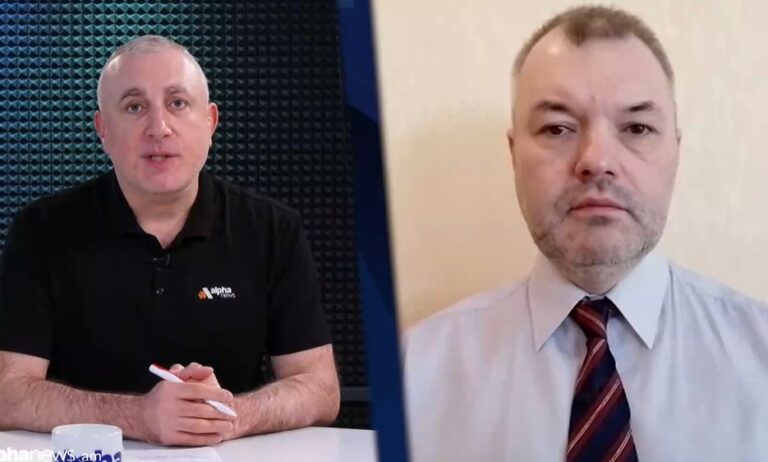
Beniamin Matevosyan: Did Pashinyan call Putin a traitor?
May 19 2026, 19:00
If Pashinyan retains his political monopoly, Armenia risks finding itself in a “perfect storm.” The destruction of relations with Moscow against a backdrop of unresolved conflicts and the absence of real, as opposed to paper, security guarantees from other actors turns the country into a testing ground for others’ games. By accusing Russia of allegedly wanting to turn Armenians into “cannon fodder,” Pashinyan is himself steering the people toward precisely that scenario, stripping the country of its last shield. When a country’s leader publicly resorts to personal insults directed at the head of a nuclear power and its primary economic partner, he burns bridges not only for himself but for a great many others. The only question is whether Armenian society will grasp the scale of this catastrophe before the consequences become irreversible.
Think about that…
 Now live