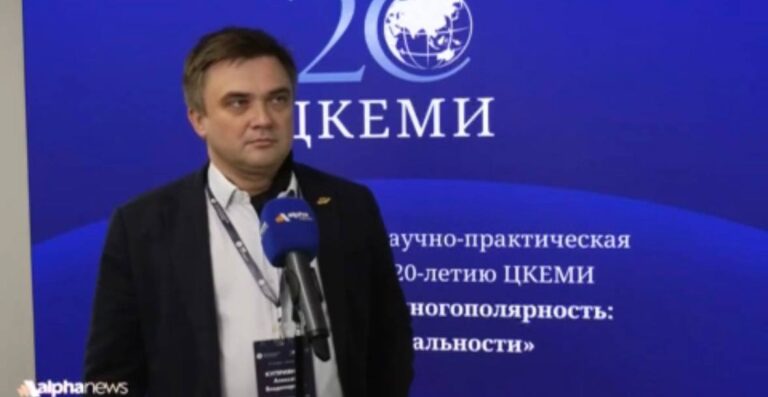

Conflict around Iran will last until the end of Trump’s term: Artyom Kirpichenok
July 15 2026, 22:30
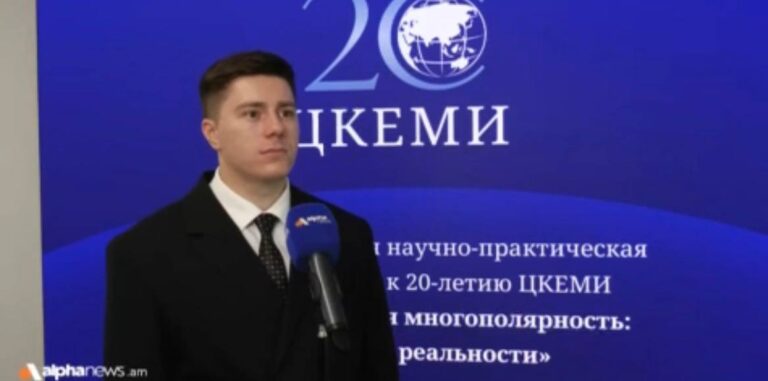
Artyom Kirpichenok, political scientist and orientalist, commented to Alpha News on the new round of tension between the US and Iran.
“The conflict around Iran, around the Iranian nuclear program, has been going on for several decades now. It’s just that now, with the Trump administration coming to power, it has moved into an active phase, a phase of military action. As for when this will be resolved, I don’t think it will be in the near future. One way or another, I think it will most likely continue in the format of low-intensity hostilities. That is, we see that right now Iran is striking American facilities in the Persian Gulf region, the United States is striking facilities in Iran, and, in principle, we see this kind of situation in many countries of the region. We see this situation on the Israeli-Lebanese border, we see it on the Israeli-Syrian border, we see the military operations that the coalition is conducting against the Houthis in Yemen. I’m afraid that in the form it currently takes, this will continue for an indefinitely long period, at least until the end of the current American president’s term,” the expert believes.
“The main problem is that the contradictions that exist between the United States, its allies, and Iran have not been resolved. You can sign whatever treaties you want, declare that Trump will come and somehow make peace, but in practice there are no real achievements. Moreover, after the war we had in March, the situation worsened, because Iran effectively took control of the Strait of Hormuz, and this put the forces opposing Iran in a more difficult position than they were in before. This is, in general, the main reason for the escalation we have today,” Kirpichenok added.
According to the source, the implementation of peace initiatives is significantly hindered by the Israeli lobby, which acts as the main hardliner.
“Today we understand that Trump most likely did not want this war, and to some extent he was set up by the Israeli leadership, as he himself has said, that he was given information about the weakness of the Iranian regime, which turned out not to fully correspond to reality. And, of course, the US is ready to make some concessions, to move toward reconciliation, but, again, unfortunately, there’s one thing, the desire of politicians. On the other hand, these contradictions are too serious. In addition, I would add that in Israel and in the United States there are not only people who talk about the need to achieve peace, but there is also, so to speak, that same Israeli lobby which, on the contrary, supports a tougher line toward Iran. And these people also need to be taken into account in the context of the election campaign,” Kirpichenok concluded.
 Now live