
If Armenia wants to separate its fate from Russia, let it be an honest choice of the people: Ivan Safranchuk
May 16 2026, 19:21
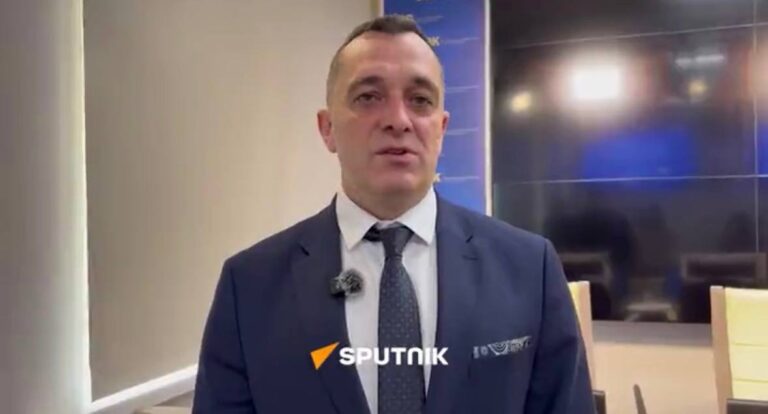
Ivan Safranchuk, professor in the Department of International Relations and Foreign Policy at the Moscow State Institute of International Relations (MGIMO) of the Russian Ministry of Foreign Affairs, commented live on Alpha News on Russian-Armenian relations, the benefits of cooperation within the EAEU, and the European integration declarations of Armenia’s current authorities.
“Russia is inclined to have clarity in its relations with partners. This is evident both in negotiations with the Americans and in relations with Europe. The President recently said: if they want to get rid of energy cooperation, why should we wait a couple of years? Let them decide right away. If someone views their relationship with Russia as a temporary arrangement and seeks to reduce it to nothing, then we too must introduce clarity now. We will act on a timeline that suits us, not them. In relations with Armenia, a prolonged period has set in where everything is done for one’s own benefit, without treating the Eurasian Economic Union as a long-term project or investing in its development. We see that in recent months Armenia has been taking steps towards European integration. Russia values those partners who regard us as long-term allies. And if someone sees us as a temporary arrangement, then a decision really does need to be made,” the expert said.
Touching on the EPC summit in Yerevan, Safranchuk stressed that when an external element emerges that outweighs a country’s own pragmatic interests, it leads to crises.
“I cannot say with full certainty how Russia’s leadership views this, but I can explain it from an expert standpoint. Russia, in principle, understands the selfish interests of others. It knows how to build relations with those who follow their own interests, even if those interests are pragmatic and self-serving. Playing the game of having fewer obligations and more benefits is rational and understandable. But if someone overplays their hand, benefits and responsibilities need to be brought into alignment. We observe that EAEU cooperation, which is advantageous for Armenia, is being treated there as a bargaining chip that can be dispensed with in the not-too-distant future. From Russia’s point of view, once rationality disappears, it means political factors are beginning to override economic ones. And when an external element emerges that outweighs a country’s own pragmatic interests, it leads to crises. We saw this in the case of Georgia, Kyrgyzstan, and the most catastrophic example, Ukraine. Today we see that Armenia is moving away from rationality under the influence of external factors. This is already a qualitative shift: whereas before there was hope that a greater sense of responsibility would emerge, now even one’s own pragmatism is being abandoned in favour of external influence. This is becoming unacceptable,” the political analyst said.
According to Safranchuk, if Armenia wishes to separate its fate from Russia, then let it be an honest decision of the people, not a manipulation.
“This argument is perceived as an evasion of an honest response. Statements have been made in Moscow about historic decisions being taken not for decades, but for centuries, bound up with our shared destiny. Yet in Yerevan, attempts are being made to present this as routine business. But these are matters that affect identity and strategic priorities. If such serious decisions are being made, they must be spoken about openly. That is why calls for a referendum are being heard: if Armenia wants to separate its fate from Russia, let it be an honest decision of the people, not a manipulation. Comments from Yerevan along the lines of ‘nothing special is happening’ only worsen the situation. It looks like falsification. The threats directed at Victory Day and the steps to dismantle the allied relationship and reorient Armenia towards the EU are being taken particularly seriously. The gravity of what is happening must not be understated,” the expert emphasised.
 Now live