
MEP: The case of Avetik Chalabyan will be a test not only for Armenia, but also for the European Union
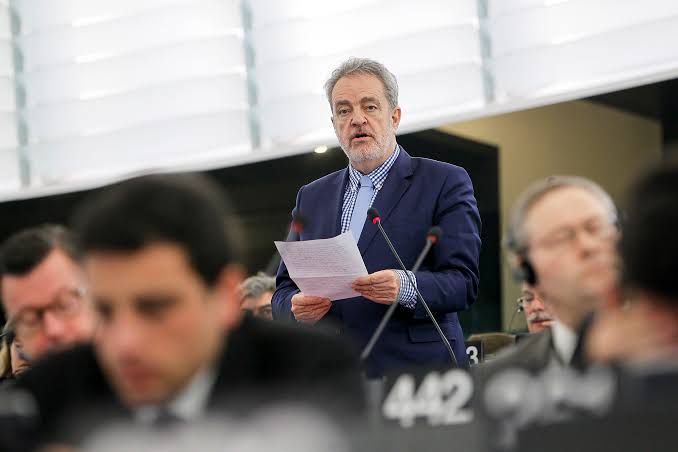
An Alpha News interview with Gerolf Annemans, Member of the European Parliament for Belgium, member of the European Parliament’s delegation to the Euronest Parliamentary Assembly and the delegation for relations with Armenia, Azerbaijan and Georgia.
You submitted a request to the European Commission regarding the prosecution of Avetik Chalabyan. Why is it important for you to raise this issue and obtain the Commission’s official position? When do you expect to receive a response to your request?
I did indeed send a request concerning the case of Avetik Chalabyan, and I am now awaiting a response from the European Commission. The documents were sent from my office last week, so it’s premature to expect any results yet.
I’m interested in whether Ursula von der Leyen, President of the European Commission, discussed this issue during her visit to Armenia a few weeks ago. Was she aware that a person had been imprisoned on such ambiguous grounds? If so, what steps were taken? At this stage, my goal is to obtain complete information about the situation. At the same time, I’m trying to find out through the European Commission what exactly this rather unusual and questionable charge of “blocking elections” actually amounts to. How can one even “block elections”? To me, it sounds completely absurd. That’s precisely why I want to gather all the necessary information first, before deciding on any further action.
At the same time, I wanted to make it clear to the Armenian authorities that we are closely monitoring their actions and how the situation develops.
Another opposition representative was recently arrested in Armenia. Overall, we’re seeing criminal cases opened against opposition figures and reports of political opponents being persecuted, with many of these cases emerging shortly after the elections. How do you assess this situation?
Certainly, the fact that all of this is happening after the elections looks quite suspicious. It seems clear that the authorities are trying to preserve a positive image within the European Union, thanks to the support of Ursula von der Leyen, since they’re counting on further European funding. That’s precisely why, in my view, they don’t want the international community closely watching how they treat the opposition after the elections. So they claim there has been so-called “obstruction of the free exercise of electoral rights.” But what exactly did Avetik do? Did he block buses carrying voters, or something along those lines? All of this looks extremely unclear. I’m speaking specifically about Avetik’s case and quoting the wording of the charge brought against him. The charge reads as “obstruction of the free exercise of electoral rights.” But what does that even mean? What exactly, according to their version, did Avetik do? What did his actions consist of? We’re not talking about someone who tried to flee abroad, cooperated with foreign states, or did anything of that sort. I’m 68 years old. I’ve worked as a lawyer since the age of 22, and in my entire professional career I’ve never encountered charges like this. You’d only find something like this in the works of Kafka. Kafka is really what comes to mind when you look at this situation. It brings to mind not only Kafka but also Arthur Koestler’s novel “Darkness at Noon.” It looks like a kind of post-communist communism.
How do you assess Nikol Pashinyan’s statements during the election campaign, when he spoke of intending to “destroy” opposition leaders? Do you consider such rhetoric acceptable in the course of a democratic electoral process?
That is absolutely unacceptable rhetoric. My concern is that the persecution of the opposition needs to become the subject of careful examination. It’s important for me to understand what the European Commission knows about this situation and how it assesses it.
Did Ursula von der Leyen discuss this issue during her visit to Armenia? Or was the focus placed exclusively on matters of oil, finance and energy? After all, this isn’t just about economic interests, it’s also about upholding democratic principles. If the European Union considers democracy one of its core values and is guided by its principles, the question arises: why aren’t situations like this subjected to serious scrutiny? Of course, I don’t expect much from political structures that, in my view, demonstrate double standards. We can see, for example, what’s happening in Hungary today: the current authorities are openly violating many of the same European principles that Viktor Orban was previously accused of breaching. And now far fewer complaints are being raised against them. So the impression arises that this isn’t just about principles, but also about political expediency and power.
That’s precisely why I’m speaking up in defense of Avetik and believe it’s important to draw attention to what’s happening to him. I’ve witnessed situations like this before. But the language being used in this case is not the language of law. It resembles more the language of autocracy, something you find in Kafka, Koestler and Solzhenitsyn all at once. As for Avetik’s case, I know this person. I know he is not someone who acts irrationally. If the charge is not backed up by real facts, I consider him innocent. Because the wording itself is reminiscent of “newspeak”, the kind of language we associate with authoritarian regimes and dictatorships. That’s exactly why I bring up Solzhenitsyn, Koestler and Kafka. But before drawing any final conclusions, it’s necessary to wait for complete information, assess the situation, examine the facts, and only then, if necessary, criticize the authorities’ actions.
Do you think the European Union will genuinely be able to critically assess the authorities’ actions? After all, there’s a view that it is, in fact, currently supporting the ruling leadership.
In this situation, the impression created is that everyone is great friends, with plenty of symbolic gestures and mutual support. Judging by the visits and contacts of European representatives, this situation is reminiscent of what happened in Hungary, and generally resembles cases where European structures build relationships with certain political forces. They find a partner who more closely shares their approach to European integration and cooperation, and they start putting their weight behind that partner. This is supposed to be about democracy, the rule of law and European values. But once a political partner emerges who acts in line with the EU’s expectations and receives European support, the impression arises that European structures no longer want to change course after that. That’s precisely why I’m pursuing this matter: for me, it’s a kind of test case not only for the Armenian authorities, but also for the European Union. The response I receive to my request will reveal a great deal and will allow important conclusions to be drawn.
During the elections, there was a lot of talk about a tense and conflict-ridden atmosphere. There’s one fact I’d also like to hear your assessment of. During the election campaign, Nikol Pashinyan repeatedly told voters that if they didn’t choose him, a new war with Azerbaijan could break out in September. Do you consider this an acceptable campaigning method, using fear of war as a tool to influence voters? Can this be regarded as a form of pressure or political blackmail?
I don’t get involved in how he ran his election campaign. What concerns me is how he behaves after the elections and how he treats the opposition.
Of course, he has the right to present himself as a politician who ensures stability in the region, and if he’s able to demonstrate that, that’s his right. But the question that arises is: at what cost is that stability achieved? If the price is the complete suppression of the opposition and the effective destruction of the conditions for it to operate normally, then I have serious doubts about the state of democracy in Armenia.
 Now live