
Russia needs a clear answer, is Armenia with the EU or the EAEU: Boris Shmelyov
May 22 2026, 11:50
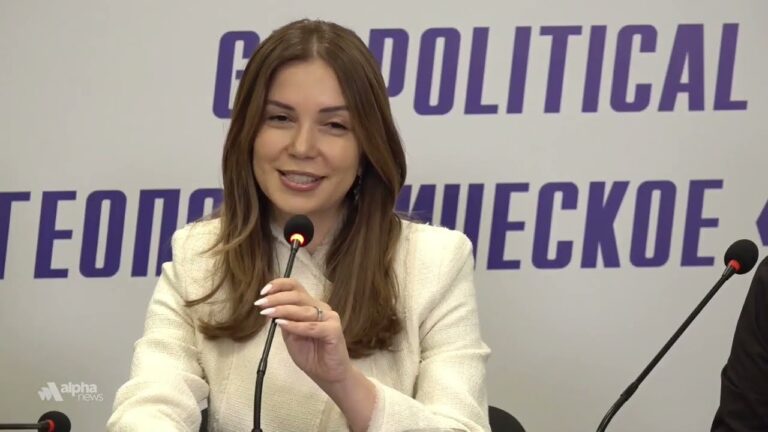
Boris Shmelyov, chief research fellow at the Center for Post-Soviet Studies and head of the political research sector at the Institute of Economics of the Russian Academy of Sciences, has commented to Alpha News on the statement by Mikhail Galuzin, Russia’s deputy foreign minister, that Armenia will not be able to be a member of both the European Union and the Eurasian Economic Union simultaneously.
“I think it is too early to discuss at an official level whether Armenia can or cannot be a member of the EAEU, given that it is developing cooperation with the EU. So far, we are only hearing various statements from official representatives in Yerevan. We have yet to see any concrete consequences, outcomes, or steps. So I think it would be wrong to inflame the situation. At the same time, Russia wants to make clear to Armenia, leaving no room for ambiguity, that it will have to choose: either it is with the EU, which entails one set of economic and political consequences, or it remains a member of the EAEU. And all of this was essentially already said by President Vladimir Putin about three weeks ago. He noted at the time that Russia has no objection to Armenia joining the EU if it deems that necessary and if it serves its national interests. By all means, just say so clearly and plainly: we are joining the EU, and then, as he put it, ‘we part ways amicably,'” Shmelyov said.
In the political analyst’s view, the tension between Moscow and Yerevan is a consequence of statements made by the Armenian authorities.
“I understand that Armenia is currently in an election campaign, but it seems to me that Armenian leaders are saying a great deal that is unnecessary. It would be possible to be more selective with statements and speeches, and to choose words in a way that formulates their position more precisely. So I believe that the certain tension that has now arisen between Russia and Armenia is primarily the result not of actions, but specifically of statements from Armenia’s leadership. I stress, statements,” Shmelyov noted.
According to the expert, after the elections the rhetoric in Armenia may become more measured.
“Of course, Russia has no objection to Armenia developing cooperation with Europe and EU countries. But on the other hand, Armenia is Russia’s ally within the CSTO and the EAEU, while Russia is in effect engaged in a confrontation with Europe and the EU. This creates a very ambiguous situation in which Russia’s ally is forging close ties with Russia’s own adversaries. This too must be taken into account in Yerevan. It is understandable that Armenia’s interests call for a so-called multi-vector foreign policy. But that policy must not come at the expense of Russia’s own interests. All of these considerations need to be thought through carefully in Yerevan, and statements should be made and positions constructed accordingly,” Shmelyov concluded.
 Now live